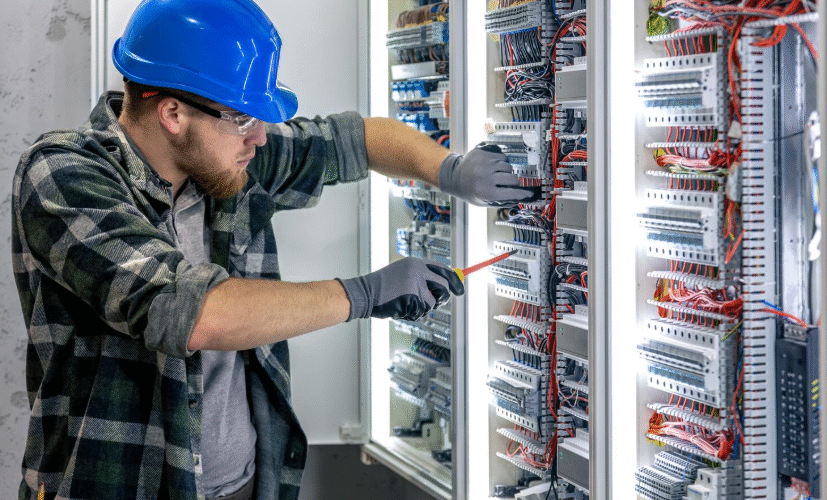
Industrial projects depend on safe, dependable power. Well-built industrial electrical panels organize circuits, protect equipment, and keep production running. This guide walks you through the main phases of planning, building, testing, and maintaining panels so your systems stay reliable.
Plan the project and requirements
Good results start with clear goals. Define voltage, load, future expansion, environmental limits, and applicable codes. When you plan early, you avoid rework and hidden costs related to industrial electrical panels building.
Pre-build checklist
Use this checklist before the first cut or purchase:
- Confirm single-line diagrams and load calculations.
- Verify required breakers, contactors, relays, and fusing.
- Choose the enclosure NEMA rating for dust, water, and temperature.
- List conductor sizes, terminal blocks, and cable entry needs.
- Order custom parts early (transformers, meters, or PLC modules).
Design and component selection
Select parts that match specs and service life. Use rated breakers, UL-listed components, and quality bus bars. A clear wiring plan and labeled terminal strips make future service faster. Good design also reduces heat and electrical loss in the panel. A key factor when sizing cooling or ventilation for industrial electrical panels.
Assembly & wiring steps
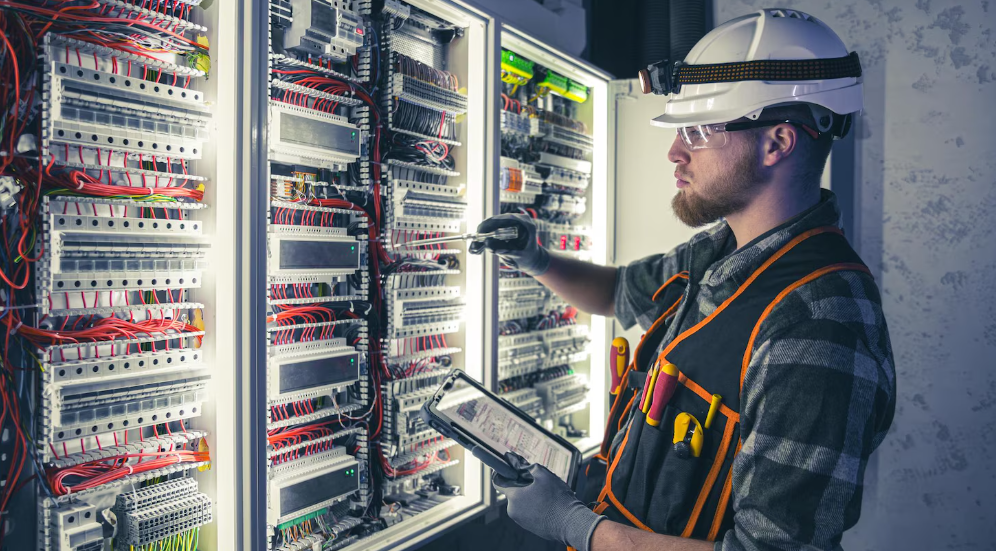
Follow these assembly steps in the shop for consistent builds:
- Lay out the enclosure and mark mounting holes and cutouts.
- Install bus bars, DIN rails, and main disconnects first.
- Place control devices (relays, timers, meters) in logical groups.
- Route conductors with neat runs; secure with ties and grommets.
- Torque all terminals to manufacturer specs and add clear labels.
- Install door wiring and confirm gasket seals for the enclosure.
This sequence keeps wiring tidy and reduces mistakes during final checks. It also supports safer onsite installation when the panel arrives.
Test, commission, and handoff
Testing is not optional. Perform insulation resistance, continuity, and phase-rotation checks. Energize the panel with a qualified team and verify protective device trips at set points. Run functional tests for control circuits and record all results. A documented commissioning report speeds up owner acceptance and insurance checks.
Maintenance and documentation
Keep a bound folder (and digital copy) with as-built drawings, wiring diagrams, torque logs, and test certificates. Schedule visual inspections and thermal scans to find hot spots early. Good documentation and routine checks prevent unplanned downtime.
Safety and code compliance highlights
Keep these safety items top of mind:
- Lockout/tagout procedures for any live work.
- Proper grounding and bonding of the enclosure.
- Clearance around panels per local code for service access.
- Use of PPE and trained electricians for voltage testing.
Conclusion
Building reliable industrial electrical panels takes clear planning, the right parts, careful assembly, and full testing. Follow the steps above to reduce surprises and keep your equipment protected. For professional panel fabrication, wiring, and on-site commissioning, contact JLL FAB for a site review and quote.